• Home
  • ABOUT
    • ABOUT
    • WHY I DO THIS WORK
  • SERVICES
    • SERVICES
    • WHAT BECOMES POSSIBLE
  • SPEAKING
    • Speaking
  • INSIGHTS
    • MEDIA
    • EVENTS
    • RESOURCES
  • CONSULTATIONS
  • Exclusive Access
    • NEWSLETTER/COMMUNITY
  • More
    • Home
    • ABOUT
      • ABOUT
      • WHY I DO THIS WORK
    • SERVICES
      • SERVICES
      • WHAT BECOMES POSSIBLE
    • SPEAKING
      • Speaking
    • INSIGHTS
      • MEDIA
      • EVENTS
      • RESOURCES
    • CONSULTATIONS
    • Exclusive Access
      • NEWSLETTER/COMMUNITY
  • Home
  • ABOUT
    • ABOUT
    • WHY I DO THIS WORK
  • SERVICES
    • SERVICES
    • WHAT BECOMES POSSIBLE
  • SPEAKING
    • Speaking
  • INSIGHTS
    • MEDIA
    • EVENTS
    • RESOURCES
  • CONSULTATIONS
  • Exclusive Access
    • NEWSLETTER/COMMUNITY
BEGIN THE CONVERSATION
Learn More
Begin the conversation

Dr. Dominique Lache'

Why Systems Must Heal

People are often expected to heal inside systems that contributed to their harm.”

Across families, schools, workplaces, courtrooms, healthcare systems, and community institutions, too many people are navigating environments that prioritize performance over people, compliance over compassion, and survival over sustainable healing.

The result is visible everywhere:
burnout, disconnection, unresolved trauma, fractured relationships, emotional exhaustion, distrust in systems, and generations of individuals carrying pain without language, support, or restoration.

For many families and communities, the challenge is not simply individual behavior. It is the reality of navigating systems that were never fully designed to address emotional safety, cultural understanding, prevention, or long-term healing.

When systems lack emotional intelligence, accountability, collaboration, and culturally responsive leadership, the impact extends far beyond one individual. It shapes families, workplaces, communities, and future generations.

This work exists because healing should not be treated as an afterthought

THE REALITY WE DON’T TALK ABOUT

Many people are taught how to survive before they are ever taught how to heal.

Professionals are expected to carry overwhelming emotional burdens without support. Families are often navigating crisis while simultaneously trying to understand systems that feel confusing, inaccessible, or reactive rather than preventative.

Survivors of trauma and domestic violence are frequently misunderstood, minimized, or expected to remain silent in order to protect appearances, relationships, institutions, or community perceptions.

Communities of color, particularly Black families, have historically navigated additional barriers rooted in mistrust, inequitable treatment, cultural stigma, over-surveillance, under-support, and deeply embedded narratives that impact how pain, vulnerability, safety, and credibility are perceived.

Too often, individuals are labeled before they are understood.

And while accountability matters, healing-centered accountability matters too.

Without intentional intervention, cycles continue:
• unresolved trauma
• violence
• emotional suppression
• dysfunctional communication
• youth instability
• system distrust
• burnout-driven leadership
• and generational patterns that quietly repeat themselves.

Healing cannot happen where people constantly feel unheard, unsafe, unseen, or unsupported.

WHAT HEALING LOOKS LIKE

Healing is not limited to therapy rooms.

Healing looks like:
• schools teaching emotional regulation and healthy relationships
• workplaces prioritizing sustainable leadership
• families learning healthy communication patterns
• professionals receiving trauma-informed training
• youth understanding boundaries, accountability, and emotional safety
• communities having safe pathways to seek support
• and institutions becoming more human-centered in how they serve people.

Healing also looks like difficult conversations, honest reflection, collaborative change, and the courage to confront systems and narratives that no longer serve people well.

Because transformation happens when awareness is paired with action.

THE HEART OF THE WORK

“Healing is not weakness.
It is the courage to confront what people, systems, and generations were taught to survive in silence.”

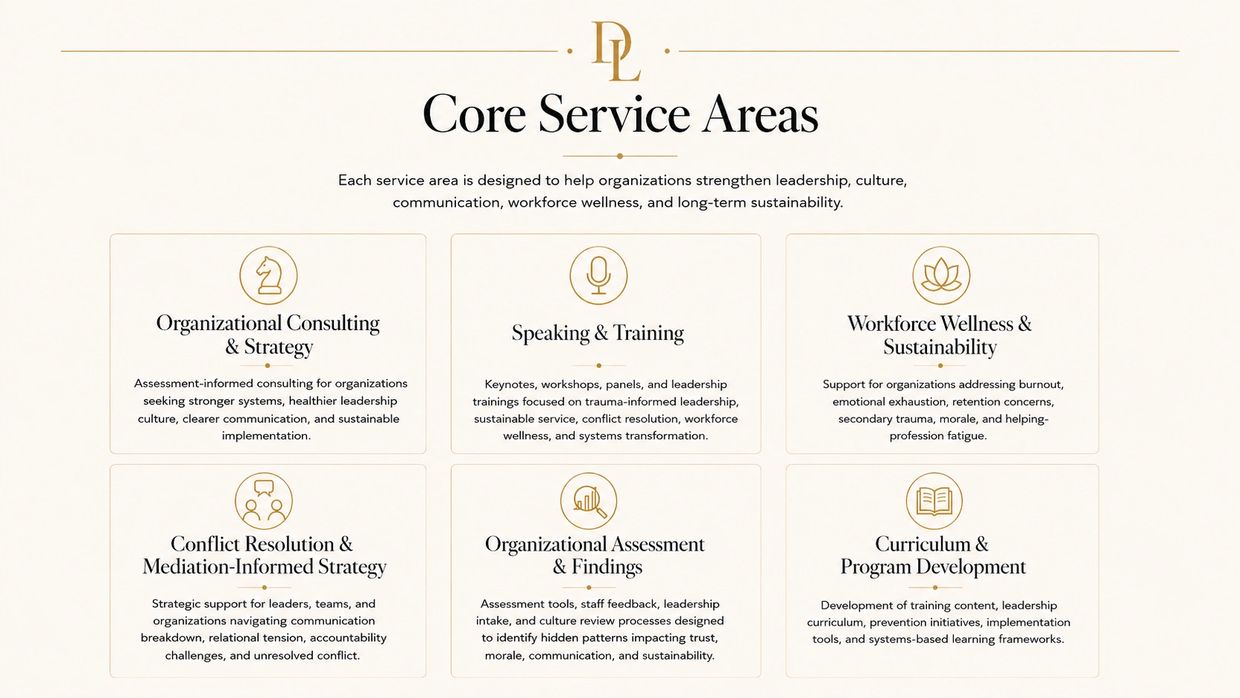
Whether through psychotherapy, mediation, speaking, curriculum development, systems strategy, or leadership training, this work exists to help individuals and institutions move from survival toward sustainable healing, accountability, and impact.

LEARN MORE

Why I Do This Work

The work people choose is often connected to the realities they refuse to ignore.

The work people choose is often connected to the realities they refuse to ignore.

My journey into this work was never rooted in simply building a career. It was rooted in understanding how systems, environments, leadership, trauma, communication, and unresolved pain shape the lives of individuals, families, and communities.

Long before entering the professional helping field, I gained my first experiences in service by working alongside my parents in caregiving environments that supported elderly individuals, individuals with cognitive and developmental challenges, residential care settings, and healthcare-related support services. Those early experiences exposed me to the emotional realities people often carry silently—and the importance of dignity, patience, advocacy, and human connection.

Service has always been a part of my life.

Whether through caregiving, leadership, writing, conflict resolution, prevention work, or systems strategy, I have always been drawn to leaving people, environments, and systems better than I found them.

Before entering the helping profession, I also served in the United States Army as a Human Resources Sergeant within the Adjutant General Corps, where I gained firsthand experience in leadership, operational systems, accountability, crisis management, and organizational stability under pressure.

That experience deepened my understanding of how systems can either strengthen people or silently contribute to burnout, dysfunction, disconnection, and survival-based functioning.

I later earned a Bachelor’s degree in Sociology, followed by a Master of Social Work (MSW) with a specialization in trauma-focused practice. As my work evolved, I pursued advanced studies in systems leadership, organizational dynamics, and conflict resolution, ultimately earning a PhD in Human and Social Services with a specialization in Conflict Management & Negotiation.

My published dissertation explored the prevalent themes of messages related to sexual risk behaviors targeting young Black women across social media platforms—examining how communication, culture, environment, and influence shape behavior and wellbeing.

Today, my work exists at the intersection of:

  • leadership,
  • emotional wellness,
  • systems transformation,
  • conflict resolution,
  • prevention,
  • and sustainable impact.

Whether working with individuals, organizations, schools, agencies, or communities, the goal remains the same:

to help people and systems move from survival-based functioning toward healthier, more sustainable ways of leading, communicating, healing, and serving.

Begin The Conversation With Me

Questions or Comments?

For more information on fees and availability, send me a message. Tell me about your event, and I will get back to you soon with more information.

Dr. Dominique Lache'
Indiana, USA

Send Message 24-48 hour response

Attach Files
Attachments (0)

This site is protected by reCAPTCHA and the Google Privacy Policy and Terms of Service apply.

Cancel

Stay Connected With " THE INSIGHT COLLECTIVE MEMBERSHIP"

  • LEADERSHIP REFLECTIONS
  • FEATURED WRITINGS
  • RESOURCE LIBRARY
  • NEWSLETTER SUBSCRIPTION

                               and MORE!

JOIN THE EXCLUSIVE ACCESS

Dr. Speaks

Copyright © 2026 Dr. Speaks - All Rights Reserved.

Powered by

This website uses cookies.

We use cookies to analyze website traffic and optimize your website experience. By accepting our use of cookies, your data will be aggregated with all other user data.

Accept